


Dear Friends
You may recall in late September I asked for prayers for Rayane who had been hospitalized with a gallbladder infection. Good news is, she was only in hospital about ten days. Thankfully the overcrowding in the hospital meant they never got around to operating and the regimen of antibiotics and painkillers they were giving Rayane did their job. The excruciating pain she was experiencing subsided and she was released with just some dietary restrictions. She’s now over a month out of hospital and doing well. Thank you for your prayers!
I just wanted to take this opportunity to share with you what a wonderful job the socialist government in Brazil is doing with public healthcare. It’s downright heartwarming!
If you’re reading this from our subscriber list, by the time you finish you may well be green with envy over the humanitarian efficiency of the Brazilian government’s public healthcare system. For example, in Brazilian public hospitals (at least in our region, one of the poorest in the country), every patient has to is allowed to be personally accompanied by a family member (or friend, or neighbor, or really just about anybody they like), usually in 24 hour shifts in the hospital.
You see, the government has decided that, instead of the wasteful expense of a large nursing staff in each and every public hospital, why not let patients bring in their own loved ones and friends to help out? So, each patient must be is allowed to be accompanied by a “helper” who can help feed and bathe them, help change clothing or bed sheets, help them to the bathroom, sometimes even change bandages, and/or IV’s. Of course, far be it from the public health system to force these family members to sleep on the floor. Each is allowed a plastic chair to rest and whenever they care to, just stretch out and have a good, long snooze in the wee hours of the night!
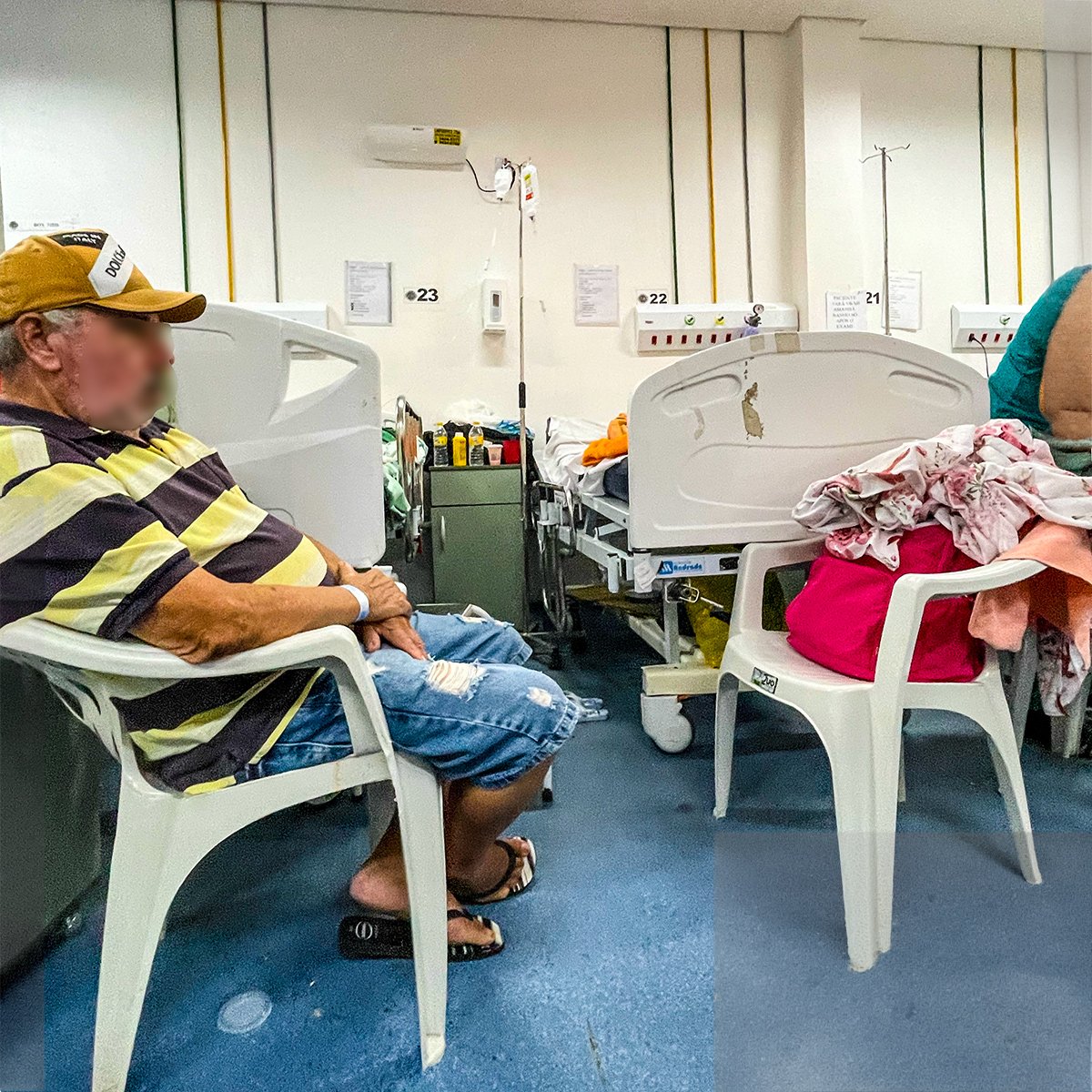
An elderly gentleman accompanying his wife in the hospital.
As you’ll see in the above photo, there’s ample room between each hospital bed for the helper’s plastic chair and a small cabinet for storing medication, diapers, etc. Here and there you’ll even find a wall outlet to charge your cell phone! And of course far be it from the government to deny the helpers a meal, so, yes of course they do get served whenever the patient eats! Isn’t that incredibly thoughtful of the government? Of course, no outside food or drink!
And…. because the government is so cost conscious and earnest about making the most of every Real (our local monetary unit), they make the most of EVERY INCH of hospital space. As you can see in the photo below, (Rayane on her ambulance stretcher in the immediate foreground), this infirmary wing, which was projected to house some 45 beds has been cleverly re-engineered so it now holds over 70 beds! Of course always leaving enough room between each bed for each helper’s plastic sleeper-chairs.
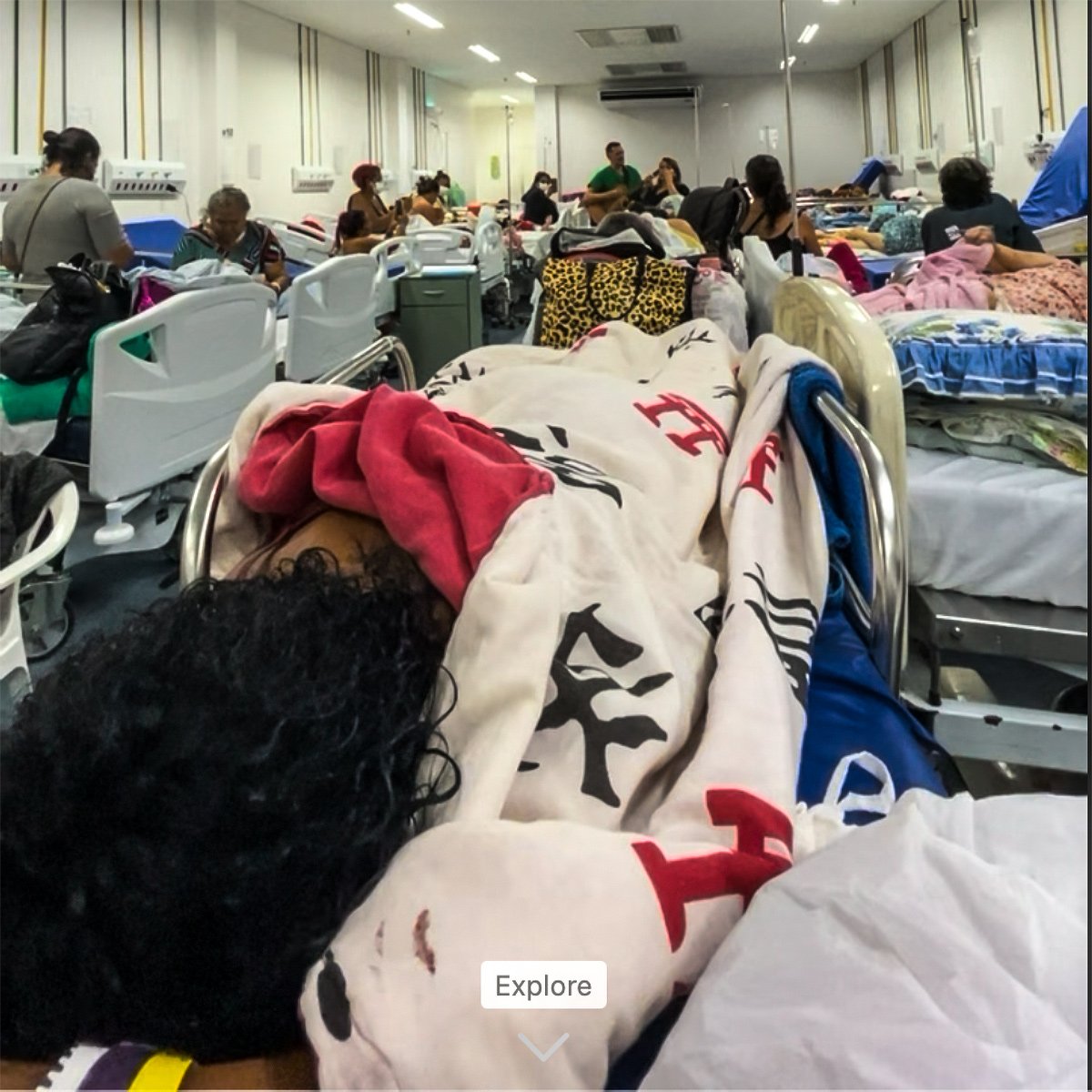
Rayane on her ambulance stretcher in the infirmary corridor.
Plus, making the most of that enormous corridor space down the center between the beds by placing ambulance stretchers lengthwise allows another 8-10 beds in each infirmary. What an engineering marvel! To say nothing of the economic gains! Doctors, when they’re making their rounds can much more easily see and attend 3-4 patients at a time! No long, tiring walks between hospital beds here!
By the way, the photos of this wing could be misleading. This is actually only one fourth of this infirmary’s wings. There’s three more in the same emergency area for a total of well over 200 patients. Such efficiency!
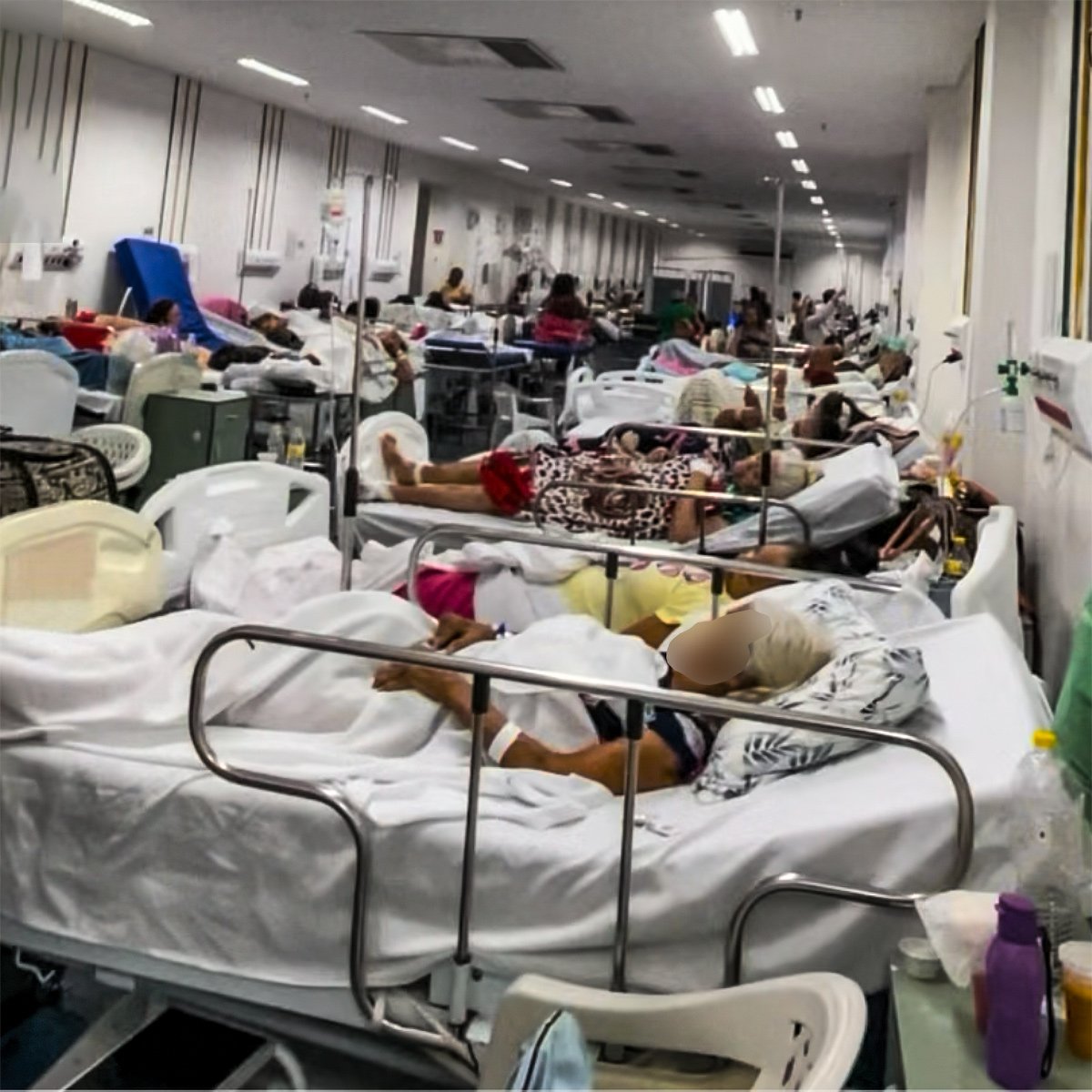
No wasted hospital space here!
And of course then we have the corridors. No waste there! Below you see just one of the many corridors in this same ER. Each and every one impressively organized to it’s utmost efficiency. Not an inch of wasted space! I promise you if you were to go on a tour of the entire hospital you’ll find every single corridor thoroughly employed to it’s utmost capacity. The ambulance personnel do face a bit of a challenge getting their stretchers with new patients in and out, but everybody’s used to the system, so no worries there.
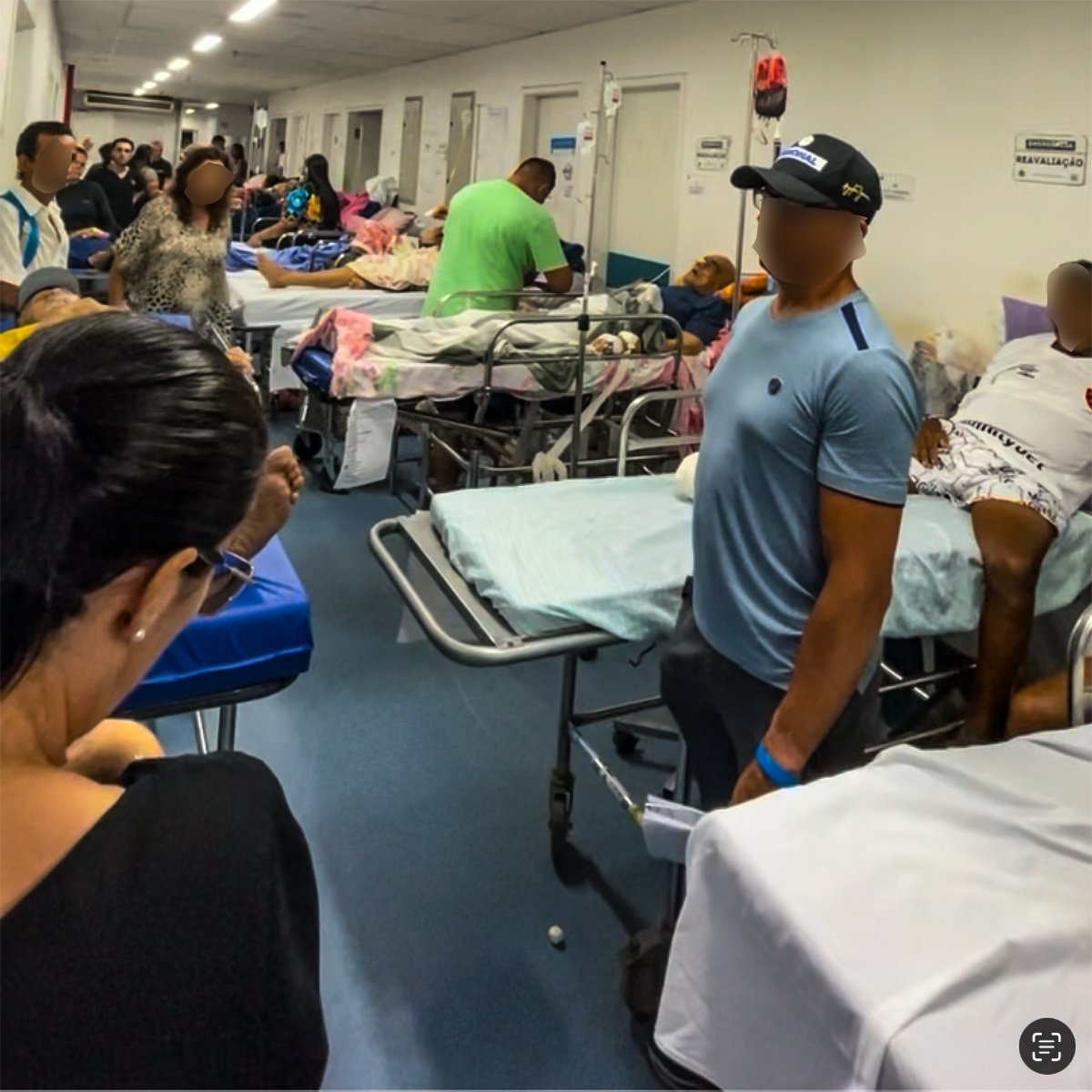
No wasted space in these corridors!
Thank you for your time and attention. And for your prayers. I hope you weren’t offended by the ironic tone. I wasn’t quite sure how to present this. At the time it seemed like a good idea. The poor have a saying here: “Laugh to not cry.” (Rir para não chorar.) Sometimes the best we can do is to try for a little humor. Just so you know, I took all these photos myself this past September. A pretty typical public hospital’s emergency wing.
In some of the infirmaries on upper floors, for patients in longer term care, the overcrowding and conditions may be a little (just a little) better. I’ve lived here for almost 40 years. The scenes you are seeing here were the same in the hospital system here forty years ago. Nothing has improved. If anything, the overcrowding is worse.
The medical professionals who work in this environment need your prayers as well. It’s impossible to provide the kind of care they were trained to give, and for many of these poor patients, the doctors and nurses are the only ones they can take their frustrations out on. Though most of the patients just sigh and bear it. And do what they can to help their fellow patients.
Please continue to pray for the least and the lost in Brazil.